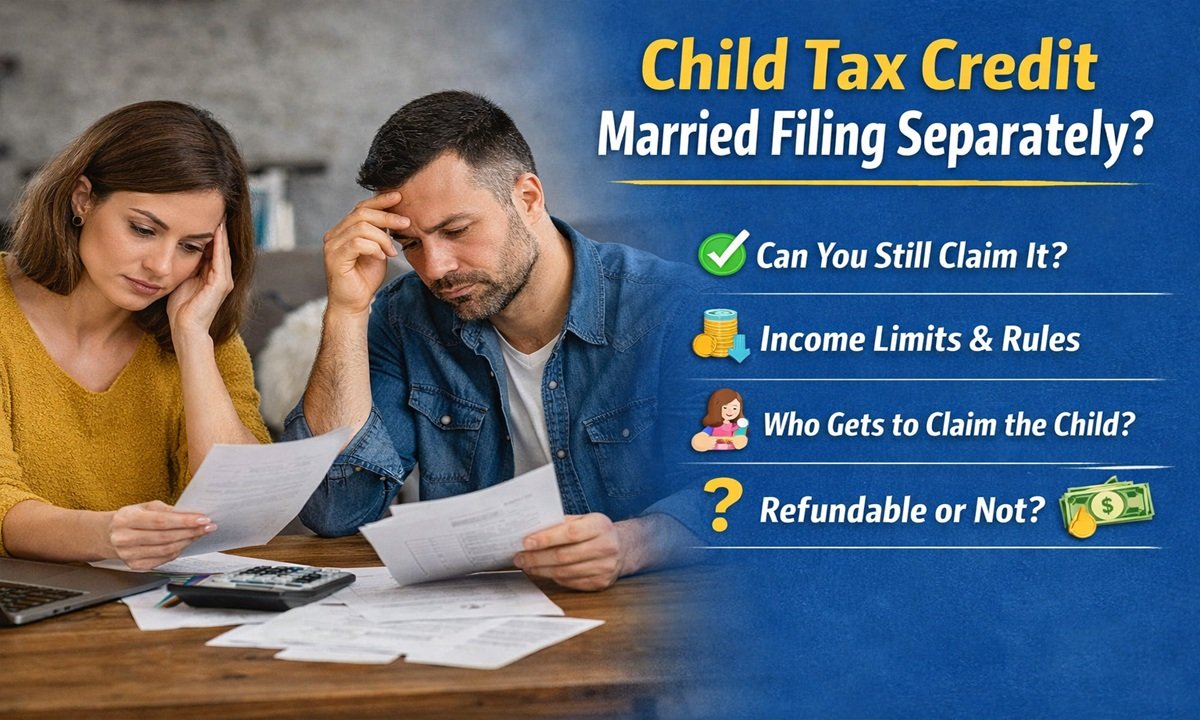
If you are married but choose to file your taxes separately, things can feel a bit confusing—especially when it comes to the Child Tax Credit. You might be wondering, “Can I still claim it?” or “Am I missing out on money?” Don’t worry—you’re not alone. Let’s break it down in a simple and friendly way.
What Is the Child Tax Credit?
Think of the Child Tax Credit like a helping hand from the government. If you have children, this credit can reduce the amount of tax you owe. In some cases, you might even get a refund. Sounds good, right?
But here’s the catch—your filing status matters a lot.

Married Filing Separately: What Does It Mean?
When you are married, you usually have two choices:
- File together (married filing jointly)
- File separately (married filing separately)
Filing separately is like walking on a different path than your spouse when it comes to taxes. Some people choose this for personal or financial reasons. But this choice can affect your tax benefits—including the Child Tax Credit.

Can You Claim the Child Tax Credit?
Here’s the simple truth: Yes, you can claim the Child Tax Credit even if you file separately—but it comes with rules.
Not everyone qualifies. The rules are stricter compared to filing jointly.
To claim the credit, you must:
- Have a qualifying child (usually under age seventeen)
- The child must live with you for more than half the year
- You must provide financial support
- You must meet income limits
It’s like a checklist—you need to tick all the boxes.

Who Gets to Claim the Child?
If you and your spouse file separately, only one of you can claim the child. You cannot both claim the same child for the credit.
So, who gets it?
Usually, the parent the child lives with most of the time claims the credit. If both parents live together, then you need to decide who will claim it. Communication is key here—otherwise, it can lead to problems with your tax return.

Income Limits Still Apply
Even if you qualify, your income matters. If your income is too high, the credit starts to reduce.
When filing separately, the income limit is lower than if you file jointly. So, you may get a smaller credit—or none at all.
Think of it like filling a glass with water. Once it reaches the top, any extra just spills over. That’s how income limits work with tax credits.
Refundable or Not?
Part of the Child Tax Credit may be refundable. This means you could get money back even if you don’t owe taxes.
But when filing separately, the refundable part can be limited. So, while you may still get some benefit, it might not be as much as couples who file jointly.
Why Do Some Couples File Separately?
You might be thinking, “If there are limits, why file separately at all?”
Good question.
Some common reasons include:
- Keeping finances separate
- Protecting one spouse from the other’s tax debt
- Student loan repayment plans
- Legal or personal reasons
It’s like choosing a different route on a map—it may not be the fastest, but it works better for your situation.
Common Mistakes to Avoid
Filing separately can be tricky. Here are some common mistakes people make:
- Both spouses claiming the same child
- Forgetting income limits
- Not checking eligibility rules
- Missing out on other tax benefits
Avoid these, and you’ll save yourself a headache later.
Is Filing Separately Worth It?
This depends on your situation. Filing separately may reduce your access to certain tax benefits, including a bigger Child Tax Credit.
But in some cases, it still makes sense.
Ask yourself:
- Am I saving money overall?
- Does this protect me financially?
- Is this the best option for my family?
If the answer is yes, then you’re on the right track.
Conclusion
Filing taxes as “married filing separately” can feel like walking through a maze, especially when it comes to the Child Tax Credit. The good news? You can still claim it—but the rules are tighter, and the benefits may be smaller.
The key is to understand the requirements, communicate with your spouse, and double-check everything before filing. When you do it right, you can still make the most of your tax situation.
FAQs
Can both spouses claim the same child?
No, only one parent can claim the child for the credit.
Do I lose the Child Tax Credit if I file separately?
No, but you may get a reduced amount or face stricter rules.
Who should claim the child?
Usually, the parent the child lives with most of the time.
Is the credit refundable when filing separately?
Partly, but it may be limited compared to filing jointly.
Is filing separately a bad idea?
Not always. It depends on your personal and financial situation.