When the world was hit by COVID-19, one of the first questions that came up was—how do we know if someone has the virus? That’s where testing became so important. You’ve probably heard of PCR tests and rapid antigen tests. But what exactly do they mean, and which one should you go for? Don’t worry, let’s break it down in simple words.
Why Testing Matters
Testing is like a flashlight in the dark. Without it, doctors can’t see who is sick and who isn’t. It helps stop the spread by making sure infected people get treated or stay at home. It also helps governments understand how the virus is moving through communities.

PCR Test Explained
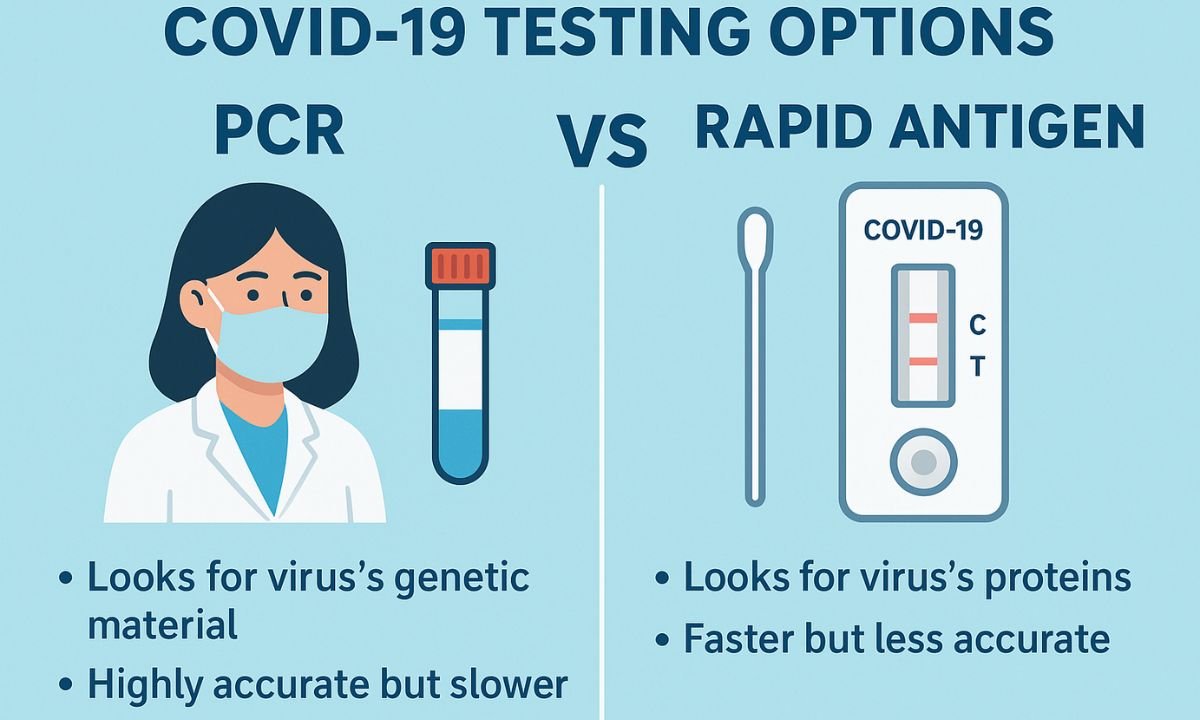
PCR stands for Polymerase Chain Reaction. Sounds complicated, right? Think of it like a super-sensitive detective that can find even the tiniest traces of the virus. A swab is taken from your nose or throat, and then the sample goes to a lab. The lab looks for the virus’s genetic material.
Because it’s so sensitive, the PCR test is often called the gold standard of COVID-19 testing. The only downside? It takes longer. Sometimes you have to wait a day or two for results because it needs special machines and experts to run the test.

Rapid Antigen Test Explained
Now, imagine you want answers quickly. That’s where rapid antigen tests come in. Instead of looking for genetic material, these tests look for pieces of the virus called proteins. They can give you results in just minutes, often at home or in a clinic.
The speed is amazing, but there’s a catch. They’re not as accurate as PCR tests. Sometimes they might miss an infection, especially if you don’t have many symptoms or if the virus level in your body is low.

Key Differences Between PCR and Rapid Antigen
So, how do they compare? Think of PCR like a high-tech camera that zooms in to capture every small detail. Rapid antigen is more like a quick snapshot—fast but might blur some details.
PCR is more accurate but slower. Rapid antigen is faster but less reliable. Depending on your situation, you might prefer one over the other. For example, if you’re traveling or need official proof, PCR is usually required. If you just want a quick check before meeting someone, a rapid test can be handy.

When To Choose Which Test
If you feel really sick and want to be sure, PCR is the best option. It can confirm the infection with high accuracy.
If you need quick results, like before going to work or visiting family, a rapid antigen test is super useful. Even though it’s less accurate, it gives you quick peace of mind.
Sometimes, doctors may even suggest taking a rapid test first and then a PCR test if needed. That way, you get the best of both worlds.
The Bottom Line
Both PCR and rapid antigen tests play important roles in fighting COVID-19. PCR is slow but super accurate. Rapid antigen is fast but less precise. Choosing the right one depends on your needs. At the end of the day, what really matters is getting tested if you feel unwell or have been exposed. Testing helps protect not only you but also your loved ones and the community around you.
Conclusion
COVID-19 testing doesn’t have to be confusing. Think of PCR as the detail-oriented test and rapid antigen as the quick check. Both have their place, and both help us stay safe. So next time you wonder which test to take, remember—it’s not about which one is better, but about which one is right for your situation.